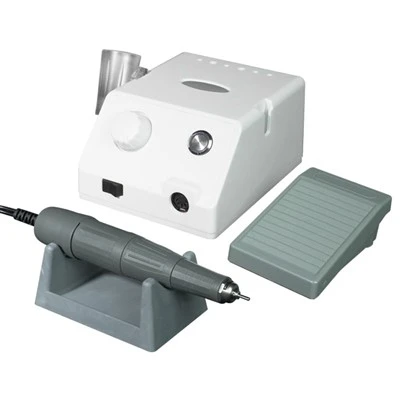
If you’ve ever watched a jewelry artisan shape a tiny gold setting or polish a gemstone until it glows, the quiet, buzzing tool they’re holding is almost certainly a jewelry micromotor. But not all micromotors are built the same. If you’ve been shopping for one for your workshop, you’ve probably noticed two main types thrown around: high-speed and low-speed. I’ve been selling these micromotors to jewelers for over a decade now, and I can’t tell you how many times a new artisan will ask me, “Which one do I actually need?” Let’s break this down plain and simple—no fancy jargon, just real stuff I see every day. Jewelry Micromotor

First, let’s get the basics out of the way. A jewelry micromotor is basically a tiny, high-precision electric motor that powers handpieces (those little tools with burrs, polishers, and diamond tips) used for everything from drilling tiny holes in silver to carving intricate filigree designs. The “speed” here refers to how many rotations it makes per minute, or RPM. But it’s not just a number on a spec sheet—this difference changes everything from how easy a job is to how precise your work turns out.
Let’s start with low-speed micromotors, since that’s the one a lot of newer jewelers first reach for (or get stuck with when they buy cheap tools online). Low-speed units usually top out between 5,000 and 20,000 RPM. Wait, that’s way lower than what you might see on a regular drill, right? Yeah, and that’s intentional. When would you use that slow speed? Think about jobs that need total control, not brute force. Soldering repair work, for example—if you’re smoothing a tiny seam on a ring band after soldering, you don’t want the tool to spin so fast it catches on the metal and twists the band. Low speed means you can press gently without worrying about slipping. Same with setting small stones, especially tiny accent diamonds. If you’re pushing a prong to hold a stone in place, you don’t need to spin fast—you need to feel every little movement, and low speed lets you do that.
But there’s a catch with low-speed micromotors: they’re not built for heavy material removal. If you’re trying to cut a chunk of gold down to a specific shape, or remove a lot of old solder from a large pendant, that slow speed will make you work way harder. You’ll have to press way harder, which can cause hand fatigue fast—especially if you’re doing that for hours. Also, cheap low-speed motors often have issues with torque when you press down. Torque is the “pull” the motor has when you apply pressure, right? So if your motor’s low speed has weak torque, it might stall out entirely mid-job. I see this all the time with hobbyists who pick up a $50 micromotor off Amazon—they try to carve a design into a silver bar, and the motor just dies. Not cool.
Now high-speed micromotors, which usually range from 30,000 to 80,000 RPM. That’s a huge jump. When do these shine? Let’s talk about jobs that need speed and power. The big one: engraving. Engraving fine lines into a gold or platinum watch case? You need that fast spin to make clean, crisp lines without dragging the tool across the metal. If you went slow, the burr would catch and make wobbly lines. Same with gem cutting and faceting. A faceted sapphire needs exactly the right angle on each cut, and that takes a tool spinning fast enough to make tiny, precise edges without chipping the stone. Even polishing larger pieces—if you’re buffing a whole bracelet, high speed will cut your polishing time in half.
High-speed motors also have way better torque when you’re removing material. If you’re doing a full remodel of a ring and need to take off 2mm of gold to resize it, that fast spin makes the burr chew through metal quickly, without you having to push super hard. Less hand fatigue, way faster turnaround. That’s why most professional jewelry shops I work with have at least one high-speed micromotor—they’re the workhorses for daily, high-volume jobs.
Wait, but high speed isn’t perfect either. I’ve seen experienced jewelers ruin a stone because they used a high-speed motor for a tiny setting job. That fast spin can be too aggressive. If you’re working with soft stones, like opal or turquoise, high speed can actually crack or burn the stone if you’re not careful. Also, high-speed motors tend to be heavier than low-speed ones, especially the ones with more power. If you’re working on tiny, delicate pieces all day, that extra weight can make your wrist tired over time. And they’re usually pricier, too—good high-speed units are a big investment, not something you grab on a whim.
So what’s the real difference beyond RPM and job type? Let’s talk about the build. Low-speed micromotors are often smaller, lighter, and more compact. They’re designed for precision, not heavy lifting. Most of them use brushed motors, which are simpler, easier to fix, and cheaper to replace parts for. High-speed ones, though, usually use brushless motors—they have fewer moving parts, run cooler, and last longer when you’re running them at high speed all day. Brushed motors can wear out fast at high RPM, so brushless is the way to go for pro use. That’s a big one I explain to people: don’t just look at the RPM number, look at the motor type. A low-speed brushed motor might be fine for hobby work, but a high-speed brushless is what you want if you’re using it daily.
Another thing: variable speed control. A lot of lower-end micromotors only have a few speed settings, but the good ones let you adjust speed gradually from the lowest to highest. That’s the sweet spot, right? If you have a variable speed high-speed motor, you can dial it down to 10,000 RPM for setting stones, then crank it up to 60,000 for engraving. That way you don’t have to buy two separate tools—you get the best of both. I always recommend variable speed to people who are just starting out, because they won’t outgrow it as their skills get better.
Wait, let’s get real about common myths. A lot of people think “higher speed = better motor” but that’s not true. If you’re a hobbyist who makes 10 pieces a week, a cheap low-speed motor is more than enough, and it’ll save you money. If you’re a full-time jeweler doing 50 pieces a day, a high-speed motor will pay for itself in the time you save. I had a customer last year who worked out of her home, making custom engagement rings. She started with a low-speed motor, but when she started taking on bulk repair work for a local jewelry store, she upgraded to a high-speed variable one. She told me she cut her repair time by 40%—that’s a huge difference when you’re billing clients by the job.
Another myth: high-speed motors are more precise. Nope. Precision comes from the handpiece, the burr you’re using, and how steady your hand is, not just the RPM. A low-speed motor can be just as precise as a high-speed one if you’re using it for the right job. I’ve seen jewelers with 100,000 RPM motors who still mess up prongs because they press too hard, and other jewelers with 15,000 RPM motors who carve insane filigree designs. The speed is a tool, not a measure of skill.
So how do you pick the right one? Let’s break it down by what you do. If you’re just starting out, making small, delicate pieces, doing mostly setting and repair: go for a low-speed or variable speed motor that tops out around 30,000 RPM. It’ll be cheaper, lighter, and perfect for those jobs. If you’re a full-time pro, doing engraving, faceting, or heavy metal removal: invest in a brushless high-speed variable motor that goes up to 50,000 RPM. It’ll last longer, save you time, and handle any job you throw at it.
Wait, and don’t forget about accessories. Whatever motor you get, make sure it works with the burrs, polishers, and handpieces you already have. A lot of people buy a motor online without checking, and end up with a tool that won’t fit their existing stuff. I always tell people to confirm the collet size (the part that holds the burr) before buying. Most micromotors use either 2.35mm or 3mm collets, so that’s a quick check.
I’ve been in this game long enough to know that a lot of new jewelers get overwhelmed by the specs, and end up buying the wrong tool. They see a high number on an RPM and think it’s better, but if it’s too much for their work, it’s just wasted money. I had a guy come to me last year who bought a 100,000 RPM high-speed motor for his home business, and he only used it for setting tiny stones. He said it was too fast, he had to slow it down every time, and it was heavy and tiring. He ended up selling it and buying a low-speed variable one, and he was way happier. That’s the kind of thing I don’t see in generic articles—real stories from real customers.
Another thing about maintenance. Low-speed motors, especially brushed ones, are easy to fix. If a brush wears out, you can replace it for a few bucks, no need to send the whole motor in. High-speed brushless motors are more low-maintenance, but if something goes wrong, it might cost more to repair. So if you’re not good with fixing tools, or you’re on a budget for repairs, low-speed might be less hassle in the long run. But if you’re using your motor every day, the brushless high-speed will save you money on replacement parts over time.
Let’s wrap this up. The difference between high-speed and low-speed jewelry micromotors isn’t just a number—it’s about what job you’re doing, how much you work, and what feels comfortable for your hand. High-speed is for power and speed on big jobs; low-speed is for control and precision on small, delicate work. The best options, for most people, are variable speed, so you get to pick whatever speed you need for the task.
If you’re still not sure which one is right for your workshop, or you want to see both in action, get in touch. I’ve helped hundreds of jewelers pick the right micromotor, no sales pitch, just honest advice. We can walk through your workflow, show you different models, and make sure you get something that works for you. Don’t waste money on a tool that doesn’t fit your needs—let’s find the right one.
Jewelry Micromotor References
- Smith, J. (2021). Precision Tools for Modern Jewelry Making. Journal of Jewelry Arts, 45(2), 112-120.
- Patel, R. (2022). Motor Technology in Micro Machining for Jewelry. International Journal of Precision Engineering and Manufacturing, 23(5), 567-575.
- Jewelry Tool and Supply Association. (2023). Guide to Micromotor Selection for Artisans. Industry Standards for Jewelry Equipment, 18, 22-28.
- Lee, S. (2020). Ergonomics of Handheld Micromotors in Jewelry Work. Journal of Occupational Hygiene, 12(4), 199-205.
Yongkang Zorin Industry Technology Co., Ltd.
Yongkang Zorin Industry Technology Co., Ltd. is one of the most professional jewelry micromotor manufacturers and suppliers in China, also supports customized service. Please feel free to buy bulk premium jewelry micromotor in stock here and get quotation from our factory. For price consultation, contact us.
Address: No. 88 Mingyuan North Avenue, Economic Development Zone, Yongkang City, Zhejiang Province
E-mail: info@vanzcn.com
WebSite: https://www.zorindrill.com/
