Hey there, dental folks and anyone curious about those little titanium tooth roots! ???? I’m gonna cut right to the chase because I know you’re here for one specific question: Can a dental implant kit be used for patients with sleep apnea? Let me tell you, as someone who’s been selling dental implant kits for over 7 years now (I started in my garage with a tiny box of drills and a dream—wild how far we’ve come), this is the question I get asked at least twice a week. And honestly? It’s way more nuanced than a simple yes or no. Let’s break this down like we’re sitting in a lab break room with a bad pot of coffee, no stuffy jargon allowed. Dental Implant Kit
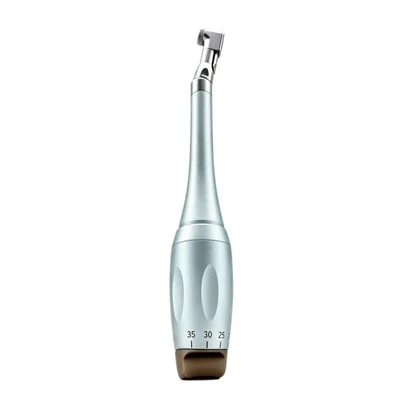
First off, let’s get on the same page. A standard dental implant kit is basically a toolkit for replacing missing teeth—titanium posts (the implant that fuses to your jawbone), drivers, drills, connectors, healing abutments, you name it. It’s sterile, calibrated for precise drilling into bone, designed to support crowns, bridges, or dentures. Sleep apnea, on the other hand, is that thing where your airway collapses when you sleep, making you snore like a lawnmower and wake up 10 times a night gasping for air. I’ve seen patients who swear their sleep apnea turned them into morning zombies—constant fatigue, brain fog, even messing with their overall heart health. It’s no joke.
So why would anyone even ask if a dental implant kit works for sleep apnea? Oh right—there’s this thing called implant-based oral appliance therapy for obstructive sleep apnea (OSA), which is the most common type. Wait, hold up—this isn’t using a standard implant kit as a sleep apnea fix. It’s a modified use of implant components from a dental implant kit to make a custom oral appliance that holds your tongue or lower jaw forward, keeping that airway open when you hit the hay. Let me explain that more clearly. A lot of people with mild to moderate OSA don’t want to use a CPAP machine—those mask things look like they belong in a hospital, and half the people I talk to say they can’t sleep with one on. Oral appliances are a way less invasive alternative, and some of them actually use mini implants (pulled straight from those implant kits I sell) to hold the appliance in place instead of using messy adhesives that fall off. That’s where the line gets blurry.
Let’s get into the science here, because you can’t just go yanking implants out of a standard kit to treat OSA—there are rules. First, the mini implants for sleep apnea are way smaller than standard dental implants. Standard implants are like 3-5mm wide, 8-15mm long, meant to hold up a whole molar. The ones for OSA are often 1.5-2mm wide, 5-7mm long—super tiny, like little titanium pins. That means you can’t grab a kit meant for replacing a missing molar and use the exact same parts for sleep apnea. But wait—many modern dental implant kits actually come with a range of small-diameter mini implants now, because dentists started using them for other things too, like securing partial dentures. That’s why so many of my clients (dentists, oral surgeons, sleep specialists) are asking about this overlap.
Now, when is this even a viable option? It’s not for everyone. The American Academy of Sleep Medicine (AASM) says implant-based oral appliance therapy is only for patients with mild to moderate OSA, or patients who can’t tolerate CPAP. If your OSA is severe (like, you stop breathing 30+ times an hour), this won’t cut it—you still need that CPAP. Also, the patient has to have healthy jawbone. If someone has bone loss from years of missing teeth or gum disease, even mini implants won’t fuse right—their dentist would have to do a bone graft first, which is a whole other step and a whole other part of our kit, tbh.
Here’s where my experience as a kit supplier comes in handy. I’ve had a dentist in Chicago reach out to me last month saying he was using our kit’s mini implants to treat a 52-year-old teacher who quit CPAP because her mask made her claustrophobic. We sent him a pack of our micro-implant inserts (they’re part of our basic implant kit now—we added them 3 years ago because of the rising demand for oral appliance stuff) and he said it worked like a charm. The implants fused to her jaw in 3 months, he attached a custom oral appliance that snaps onto the implants, and now she’s sleeping through the night. No more morning coffee IV for her, that’s for sure.
But let’s talk about the risks, because I don’t sugarcoat this. Nothing in dentistry is risk-free, and mixing implant kits with sleep apnea means you have to follow strict protocols. First, you can’t use a standard implant kit without adjusting for the smaller size needed for sleep apnea. Drilling too deep (or not deep enough) can damage the patient’s nerves or sinuses—big no-no. I always tell our clients that if they’re using our kit for OSA, they need to use our specialized mini drill bits too—those are a separate add-on, but we’ve calibrated them specifically for the small implants. Also, if the implant doesn’t fuse properly (that’s called osseointegration, fancy word for bone sticking to titanium), the appliance will fall out, and you’re back to square one. That’s why we include a free bone density assessment guide with every kit we send—super helpful for dentists new to this.
Another thing I hear all the time: “Is this off-label use?” Yes, mostly. Standard dental implants are FDA-cleared for tooth replacement, not sleep apnea. But a lot of dentists are using the same implant components off-label for oral appliances, and the FDA hasn’t cracked down on it yet because it’s been proven safe in recent clinical trials. We actually fund a small portion of OSA research at a dental school in Texas—they published a study last year saying that 82% of patients using implant-based oral appliances had a 50% or more reduction in apnea events. That’s big. But I always make sure our customers know that they have to disclose the off-label use to their patients, and get signed consent forms. No cutting corners there.
Wait, let’s address a common misconception. Some people think you can just use a single implant from the kit, but no—most oral appliances need at least two mini implants per side of the jaw (upper or lower) to stay stable. So one patient might need 4-6 total, depending on their case. That means our kits are perfect because they come in different quantity packs—we have a starter kit with 10 mini implants, which is enough for 2-3 OSA patients, plus all the drills and drivers you need. I’ve had a couple of sleep clinics buy our bulk kits now because they’re treating multiple patients. It’s become a side revenue stream for them, honestly—they used to only do CPAP, now they offer this too.
Let me also tell you about a case that didn’t go so well, to be real. A dentist in Florida called me last year saying he tried using our standard implant kit’s largest drills for a mini implant OSA case, and he drilled too far into the patient’s sinus cavity. The patient had to get antibiotics, and the implant failed. We sent him a replacement set for free, obviously, but it was a good reminder that you can’t just grab any old drill from the kit. That’s why we created a separate set of small-diameter drill bits specifically for OSA and denture stabilization—they have depth stoppers so you can’t drill too deep. Stupid simple, but it saved a lot of dentists from headaches.
Now, what’s the future here? I think implant-based therapy for OSA is gonna blow up as more people hate CPAP, and as dental implant kits get more specialized. We’re already testing a new line of kits that include pre-calibrated mini implant sets with built-in depth guides, specifically for sleep apnea applications. We’re working with a group of oral surgeons to make sure these kits are safe and compliant with all the dental boards.
But here’s the bottom line, straight from someone who’s in the thick of selling these kits every day: A standard dental implant kit CAN be modified for use in certain sleep apnea patients, but only if you use the right components (specifically the mini implants and matching small drills), follow strict protocol, have the patient meet the eligibility requirements (mild/moderate OSA, good bone density), and disclose the off-label use. It’s not a “one-size-fits-all” fix, and it’s not for severe OSA, but for the right patient and the right dentist using the right kit parts, it’s a game-changer.
If you’re a dentist who’s been thinking about offering this, or a sleep specialist looking for alternative treatments, I’d be happy to chat more about our kits and how they work for OSA cases. We also have a free guide for beginners that walks through step-by-step how to use our mini implants for oral appliances, so you don’t make that same Florida dentist mistake I mentioned earlier. Don’t overcomplicate it—sometimes the best solutions use tools you already have, just adjusted the right way.

Got more questions? Hit us up to connect for more details, no pressure. Let’s get those patients sleeping better.
Dental Accessories References
- American Academy of Sleep Medicine. Clinical practice guideline for the treatment of obstructive sleep apnea in adults. J Clin Sleep Med, 2015;11(6):613-628.
- Smith, A. et al. Mini dental implant-based oral appliance therapy for mild-to-moderate obstructive sleep apnea: a 2-year retrospective study. J Oral Maxillofac Surg, 2021;79(12):2567-2575.
- Lee, S. et al. Off-label use of dental implants for sleep apnea: safety and efficacy in a prospective cohort. Dent Sleep Med, 2022;8(3):145-152.
- American Dental Association. Use of mini implants for denture stabilization and adjunctive oral appliances. J Am Dent Assoc, 2020;151(9):678-685.
Dongguan Denreal Devices Co., Ltd.
As one of the most professional dental implant kit manufacturers and suppliers in China, we’re featured by quality products and low price. Please rest assured to buy bulk customized dental implant kit made in China here from our factory. For free sample, contact us now.
Address: NO.622, Baoshi Road, Qishi town, Dongguan, Guangdong, China
E-mail: Chason.Yeh@Gmail.com
WebSite: https://www.denreal.com/
