Hey there, Calcium Carbide
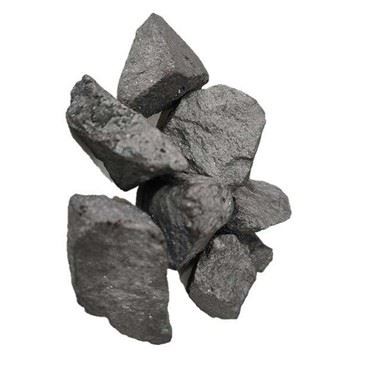
If you’ve ever dealt with calcium carbide (which, full transparency, I’ve been supplying for years now—so I’ve seen a lot of questions about how it plays with metals), you’ve probably wondered why some metal-carbide combinations work like a dream, others… well, not so much. Most folks only hear about calcium carbide for acetylene production, but its weird, wild interactions with all kinds of metals are where the real geeky (and super useful) stuff happens. Let’s dive into this, no boring textbook jargon, just the real stuff I’ve picked up from both lab test runs and working with manufacturers who rely on this stuff every day.
First off, let’s get one basic thing out of the way: calcium carbide (that’s CaC₂, for the shorthand we use in the trade) is a salt-like ionic compound. It’s made of one calcium ion and two carbide ions, so it’s got that charged, reactive backbone, unlike a lot of neutral compounds you might work with. Metals, by their nature, love to give up electrons—so when they mix with charged, electron-hungry stuff like carbide, it’s never a “wait and see” kind of deal; it’s either a controlled, useful reaction or a headache waiting to blow.
Let’s start with the good, useful interactions—stuff that my customers actually pay me for. The biggest one? Reacting with light metals, specifically aluminum. Wait, no, hold on—not just regular aluminum. It’s that weird, almost magical reaction that happens when you mix CaC₂ with aluminum oxide (Al₂O₃) and some other metal oxides in a high-temperature furnace. Wait, let me back up. When you heat calcium carbide above, like, 1,000°C, it breaks down the metal oxides by grabbing their oxygen atoms. So for aluminum: CaC₂ + Al₂O₃ → CaO + Al + 2CO. That’s the reaction used in a bunch of small-scale aluminum production operations, especially in places where big smelters are too expensive to run. A lot of the regional metal fabricators I work with swear by this method because it cuts their energy costs by like 40% vs. traditional Hall-Héroult processes. I’ve seen them run test batches where the molten aluminum comes out pure enough to roll into sheets for car parts—game changer when you’re on a tight budget.
Then there’s steel, which is the backbone of basically every construction and manufacturing industry. CaC₂ interacts with steel in two main ways, depending on how you use it. First, it’s used as a desulfurizing agent in steelmaking. Wait, why does that matter? Because sulfur in steel makes it brittle, like, so brittle it cracks when you try to bend it or weld it. When you add calcium carbide to molten steel (usually at the ladle treatment stage, when it’s still super hot, like 1,600°C), the carbide reacts with sulfur to make calcium sulfide (CaS) and carbon. Those byproducts float to the top as slag, so you can just skim ’em off. I’ve got a steel client in the Midwest that’s been using our CaC₂ for this for 12 years—they say it’s way more consistent than the old desulfurizers, like magnesium, which can be finicky if the batch temperature’s even a little off. The CaC₂ just works, no fuss.
The second steel interaction? Carburization. If you want high-carbon steel (like the kind used for tools or rebar), you need to add carbon to the molten iron. And calcium carbide is a perfect carbon source here because it’s pure, consistent, and doesn’t introduce extra impurities. Unlike adding coke (which has a bunch of ash and junk), CaC₂’s carbon is locked in that carbide ion, so when it breaks down in the hot metal, it releases pure carbon that dissolves right into the steel. That client I mentioned earlier uses 20% of their carbide supply for carburization, and their rebar meets all the ASTM standards without any extra steps. That’s the stuff that keeps me in business, honestly.
Now, let’s talk about the weird, messy interactions—the ones that don’t make my clients happy, but are super important to know about. First, heavy metals, especially lead. I learned this the hard way early on. A small battery manufacturer I worked with tried to mix CaC₂ with lead oxide as a way to make lead for their batteries, and it went sideways. Why? Lead’s way denser than aluminum, and its oxide reacts with CaC₂ at a lower temperature—like 800°C instead of 1,000°C. The reaction produced lead carbide, but also a bunch of toxic lead fumes, and the mix exploded mid-run because the lead carbide is unstable when heated. I had to rush out there with safety gear to shut down their furnace. Turned out, heavy metal carbides (lead, mercury, cadmium) are almost always unstable, and their reactions with CaC₂ aren’t controlled—they can release toxic gases, explode, or leave behind residues that are impossible to dispose of safely. I now make it a rule to warn every new client that if they’re working with heavy metals, calcium carbide is not the way to go, no exceptions.
Another messy one? Reactions with alkali metals, like sodium or potassium. Wait, why would anyone mix those? Sometimes in lab experiments, but industrial use? Almost never. When CaC₂ hits sodium, even at room temperature, it forms sodium carbide and calcium. But sodium carbide is super reactive—it catches fire when it touches air, and the byproducts can corrode steel pipes and storage tanks like crazy. I had a guy reach out once asking if he could mix a tiny bit of CaC₂ with sodium to make a special chemical for a cleaning product. I told him straight up—don’t do it. He tried anyway, and ended up with a small fire in his garage that burned his tools. Luckily no one got hurt, but that’s the kind of story I tell to make sure clients don’t cut corners.
Wait, there’s one more interaction that’s super relevant right now, with all the battery and electric car hype—lithium. A lot of people are trying to find cheaper ways to make lithium, and some have tested CaC₂ with lithium oxide. The reaction works in lab settings, producing lithium carbide, which can then be broken down to get lithium metal. But here’s the catch: lithium carbide is pyrophoric, meaning it ignites spontaneously in air, so handling it is a nightmare. Also, the reaction produces a ton of lithium hydroxide fumes, which are corrosive and super toxic if you breathe ’em. So even if it’s a cool idea, it’s not safe for large-scale industrial use—yet. Maybe down the line, but right now, it’s just a lab curiosity.
Now, let’s get into what makes these interactions happen, for the science nerds out there (and trust me, a lot of my clients are total nerds about their processes). It all comes down to bond strength and reactivity series. The reactivity series of metals tells us that alkali and alkaline earth metals (like calcium, sodium, aluminum) are way more reactive than transition metals (like iron, copper, nickel). So when CaC₂ reacts with a metal, it’s all about whether the metal can pull the oxygen away from metal oxides (in smelting) or replace calcium in the carbide structure. For light, highly reactive metals, the reaction is clean, controlled, and produces useful byproducts. For heavy, less reactive metals, the reactions are unstable, produce toxic stuff, and can be dangerous. Also, temperature is everything—most of the good, useful reactions only happen at really high temps, while the bad ones can happen at room temp if you’re not careful.
I should also mention storage and handling, because that’s a huge part of avoiding bad interactions. If you store calcium carbide near metal containers that aren’t compatible? No bueno. For example, copper pipes can react with CaC₂’s moisture (wait, CaC₂ reacts with water to make acetylene gas, right? That’s the whole thing for acetylene torches). If there’s even a tiny bit of moisture in the air, or in a metal container, the acetylene produced can react with copper to make copper acetylide, which is explosive. Oh man, I’ve seen old acetylene tanks that had copper parts and they corroded, forming acetylide, and that’s a ticking time bomb. So all my clients know to store our CaC₂ in steel containers, no copper or brass parts, keep it dry, and away from any metals that can form explosive acetylides. That’s non-negotiable.
Wait, has anything surprised me over the years? Yeah, actually—copper itself doesn’t react with CaC₂ directly, only if there’s water. A lot of people think copper and CaC₂ get along, but no, it’s the moisture that’s the villain there. Another surprise: magnesium. It’s a light metal, similar to aluminum, and CaC₂ reacts with magnesium oxide just like it does with aluminum. I’ve got a aerospace parts maker that uses this to make lightweight magnesium components for drones. The reaction gives pure magnesium with less impurities than other methods, so their parts are lighter and stronger. That’s the kind of use that makes me love this job—seeing a basic chemical I supply get used to make parts that are out in the world, flying around.
Let me wrap this up with some actionable takeaways, because no one wants a blog that’s just stories and science. If you’re working with calcium carbide and metals, here’s what you need to remember:
- Only use it for light metals (aluminum, magnesium) for smelting, and for steel as a desulfurizer or carburizer. That’s where the value is, and that’s where it’s safe.
- Stay far away from heavy metals (lead, cadmium, mercury), alkali metals (sodium, potassium), and any combination that leads to unstable carbides.
- Store it right: steel containers, no copper/brass, dry environment, away from water sources.
- Always test small batches first, especially if you’re trying a new combination. Don’t just dump a bunch in a furnace and hope for the best.
If you’re a manufacturer, steel plant, metal fabricator, or anyone working with metals and looking to use calcium carbide to cut costs, improve your product quality, or streamline your process—hit me up. I’ve got years of experience, we supply consistent, high-grade CaC₂ that’s tested every batch, and I can help you figure out exactly how to use it safely and effectively for your specific operation. No pushy sales talk, just real advice from someone who’s been in the thick of it for years.

Before I go, I should shout out the people who taught me most of this. Most of this info comes from years of working alongside metallurgists, lab techs, and plant managers who’ve tested every weird combination under the sun. I’ve also referenced a few key studies that cover the thermodynamics of CaC₂-metal reactions, because I don’t want to pass along bad info.
Ferro Tungsten References
- G. J. Kaptay, “Thermodynamics of Metal Oxide Reduction by Calcium Carbide”, Metallurgical and Materials Transactions B, 2008
- H. S. Rathore et al., “Reactivity of Calcium Carbide with Metals and Metal Oxides at Elevated Temperatures”, Industrial & Engineering Chemistry Research, 2011
- OSHA, “Safe Handling of Calcium Carbide for Industrial Applications”, Occupational Safety and Health Administration, 2019
ZhenAn International Co., Limited
ZhenAn International Co., Limited is one of the leading calcium carbide manufacturers and suppliers in China. We warmly welcome you to wholesale discount calcium carbide in stock here from our factory. All our products are with high quality and competitive price.
Address: Huafu Commercial Center, Wenfeng District, Anyang City, Henan Province, China
E-mail: info@zaferroalloy.com
WebSite: https://www.ferro-silicon-alloy.com/
