Hey there, fellow nail techs, salon owners, and anyone dealing with those stubborn fungal nails that won’t quit – let’s cut to the chase today because I get so many questions from both professionals and regular folks hitting my inbox: Can I actually use a nail drill machine on fungal nails? As someone who runs a nail drill machine supply business, I’ve seen every take on this question: from nail techs refusing to go near infected nails, to people trying to grind their toes raw at home, and even some misinformation online that’s scaring people or putting them at risk. So let’s break this down straight, no fluff, based on real nail science, what I’ve heard from top podiatrists I partner with, and what I actually recommend for our customers (since their safety is way more important than making a sale quick). Nail Drill Machine

First, let’s get one thing clear: fungal nail infections (aka onychomycosis) are not something to play around with. That’s the yellow, crumbly, thick nail that often starts at the tip and creeps toward the cuticle, caused by tiny fungi that thrive in warm, moist places – like old gym socks, damp salon mats, or shoes you never let air out. It’s super contagious, too, so if you’re a nail tech, you don’t want to transfer that from one client to another, and if you’re at home, you don’t want it spreading to your other nails or skin. Now, back to the drill question – short answer? Yes, but only if done correctly, and with a huge side of caution. Let me explain why drill use is even a thing here, because a lot of people don’t get that part.
The whole point of using a nail drill on fungal nails isn’t to “kill the fungus” – it’s to thin down that thick, crumbly, infected part of the nail so topical antifungals (the ones you rub on) can actually penetrate. Those infected nail layers are like a thick, impenetrable wall – if you leave that on, the antifungal can’t get past to the nail bed where the fungus is living. A lot of people think drilling scrapes the fungus off, but no – it just removes the dead, dense nail debris that’s blocking treatment. That’s key to remembering.
But here’s the part that trips everyone up: wrong drill use here is dangerous. I’ve had a few customers tell me they tried using a cheap, no-frills drill they picked up at a big-box store at 20,000 RPMs and ended up cutting their toe so bad they got a secondary bacterial infection. That’s the big risk here. The nail (even a fungal one) is attached to the nail bed, and if you dig too deep or go too fast with a coarse bit, you can nick the skin, introduce more bacteria, or even cause the fungus to spread deeper. So it’s not that the drill is bad – it’s how you use it.
Let’s get specific for nail techs first, since they’re the ones dealing with this professionally all the time. If you’re a tech who’s trained in safety and drill use, you can absolutely do this on a client, but only if they’ve cleared it with their podiatrist first. Wait – why the podiatrist nod? Because some fungal infections go way past the nail bed into the skin, and a doctor might not want you disturbing it. Also, if someone has diabetes or poor circulation, even a tiny nick can turn into a huge issue – that’s a non-negotiable check before anyone touches a nail drill to a fungal nail, full stop. For techs, what do we recommend? Use a slow speed – like 5,000 to 10,000 RPMs, max. Coarse bits are for acrylics, so use a very fine, sterile carbide bit, or even a sanding band meant for gentle thinning. Never go back and forth roughly – use light, gentle, single-pass movements, and only thin the infected top layer, not the healthy nail underneath. Also, sterilize that bit after every single use. Fungal spores are tough – even a quick wipe with alcohol won’t kill them, so autoclave it or use a disposable drill tip if you’re working with multiple clients. That’s non-negotiable for salon safety, too – you don’t want to spread fungus between clients, which is a quick way to get a complaint or lose your license.
Now, what about at-home use? A lot of people with fungal nails want to skip the salon and do this themselves, and I get it – antifungals are expensive, salon visits add up. But I can’t stress this enough: if you’re not a trained nail tech, don’t do this at home unless you have explicit approval from your doctor. I’ve had so many people message me saying they tried grinding their toenail down, now it’s bleeding, and they don’t know if it’s getting better or worse. The reason at-home use is risky is twofold: first, you can’t judge how deep to go – one wrong move and you’re cutting into the nail bed. Second, most at-home nail drills are not made for precision – they’re cheap, have variable speeds that are hard to control, and use bits that are way too coarse for thinning fungal nails. If you are cleared by your doctor to do it at home, what should you do? Use the gentlest speed setting on your drill, a very fine, sterile bit, and go super slow, checking the nail constantly – stop if you feel any pain at all. And again, sterilize everything after use, keep that area dry, and don’t share your drill with anyone. A lot of our customers who do use drills at home actually opt for smaller, rechargeable, precision models we carry specifically for that – nothing fancy, just enough control to thin the nail without a ton of power.
Wait, let’s address the big myth I see everywhere online: “drilling kills the fungus.” No, it doesn’t. The only things that kill fungal nail infections are prescription oral antifungals (which have side effects, so they’re only for severe cases), topical antifungals that penetrate the nail, and sometimes laser treatment. Drilling is just a helper to make the other treatments work better. If you drill and don’t use the right antifungal afterward, you’re wasting your time. That’s why our team always tells customers – drill use is not a cure, it’s a part of a treatment plan.
I also want to talk about when you shouldn’t use a drill on a fungal nail, because that’s just as important as when you can. First, if the infection is painful, swollen, or there’s pus – that’s a secondary infection, see a doctor immediately, don’t touch a drill. If you have diabetes, poor circulation, or any nerve damage in your feet, even a tiny cut can lead to serious issues, so skip the drill entirely and talk to your podiatrist about other options. If you haven’t gotten clearance from a medical professional, wait. And if you’re a nail tech, you’re not supposed to drill over the cuticle area, because that’s where the skin is thinnest and most prone to nicks – stay at least 1mm away from the cuticle when thinning.
Now, as a supplier, I’m not here to push you to buy a drill and do this at home if you shouldn’t. I’ve been in this game for years, and I’d rather lose a sale than recommend something that could hurt someone. That said, I have a lot of nail tech customers who rely on our drills because they make thinning fungal nails safe and consistent, since our models have adjustable speed settings, ergonomic handles so you don’t slip, and bits designed for gentle, precise thinning. I also work with a few podiatrists who recommend our drills to their patients who are clear for at-home use, because we prioritize safety over power – no super high RPMs that are hard to control.
Let me share a quick real story to drive this home. A nail tech I worked with a few months back reached out to me panicking – she’d used a cheap drill she borrowed from a friend on a client’s fungal nail, went too fast, nicked the skin, and the client ended up with a fungal infection that spread to her thumb. She had to stop taking clients for two weeks, paid for the client’s doctor bills, and almost lost her salon license. That’s the kind of thing that happens when you skip safety and use the wrong tool. Fast forward, she bought two of our mid-range drills specifically for fungal nail work, took a short training course I put together for our customers on safe drill use for onychomycosis, and now she regularly works with clients with fungal nails without any issues. That’s the difference between using a drill correctly and cutting corners.
Another thing I want to mention: after drilling, you have to keep that nail area clean and dry. The pores in the nail that were opened up by drilling are more vulnerable, so wipe the nail with rubbing alcohol after you’re done, put on a thin layer of your topical antifungal, and make sure your shoes and socks are breathable. If you’re at home, change your socks twice a day, don’t wear the same shoes two days in a row, and keep your feet dry – moisture is what feeds the fungus.
Let’s wrap this up so it’s super clear. Can you use a nail drill machine on fungal nails? Yes – but only if:
- You have explicit approval from a podiatrist or doctor
- You use the drill correctly (slow speed, fine sterile bit, gentle pressure)
- You sterilize all tools after every use
- You combine this with appropriate antifungal treatment, not just drilling
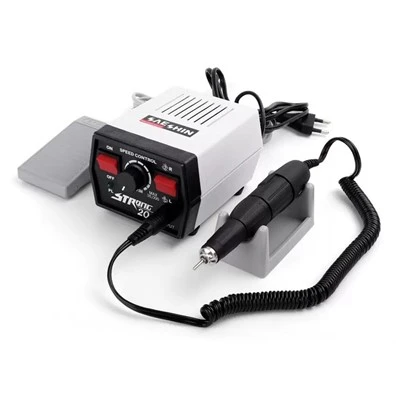
If you’re a nail tech, add drilling for fungal nails to your services only after training, and never work on a client without medical clearance. If you’re at home, skip it unless your doctor says it’s okay – and if you do, invest in a reliable, precision drill (we carry those, fyi) to keep it safe.
Dental Micromotor If you’re a nail tech or salon owner looking for safe, high-quality nail drills for this kind of work, or someone who’s been dealing with a fungal nail and wants to chat about the right tools for your treatment plan, reach out to our team. We don’t just sell drills – we’re here to help you use them safely, whether you’re a professional or someone navigating this at home.
References
- American Academy of Dermatology. Onychomycosis (fungal nail infection) treatment guidelines.
- Nail Technician Safety Association. Best practices for drill use on infected nail beds.
- Podiatric Medical Association. Considerations for nail drill use in patients with onychomycosis.
Yongkang Zorin Industry Technology Co., Ltd.
Yongkang Zorin Industry Technology Co., Ltd. is one of the most professional nail drill machine manufacturers and suppliers in China, also supports customized service. Please feel free to buy bulk premium nail drill machine in stock here and get quotation from our factory. For price consultation, contact us.
Address: No. 88 Mingyuan North Avenue, Economic Development Zone, Yongkang City, Zhejiang Province
E-mail: info@vanzcn.com
WebSite: https://www.zorindrill.com/
