If you’ve ever shopped for PVC steel wire hoses, you know how much depends on the small parts that hold it all together. As a supplier that’s been working with these hoses for over a decade, I’ve lost count of how many times a customer has come to me frustrated because the coupling they picked didn’t work—leaks mid-job, falls off under pressure, or just crumbles after a couple weeks of regular use. A lot of people think coupling selection is just a matter of matching sizes, but that’s the easy part. The real work is thinking through what your hose is actually going to do, what environment it’s going to live in, and what materials are actually strong enough to handle the work. Today I want to walk through the process we go through with every customer when we help them pick the right coupling, the same process we’ve refined after thousands of installs and more than a few mistakes along the way. PVC Steel Wire Hose
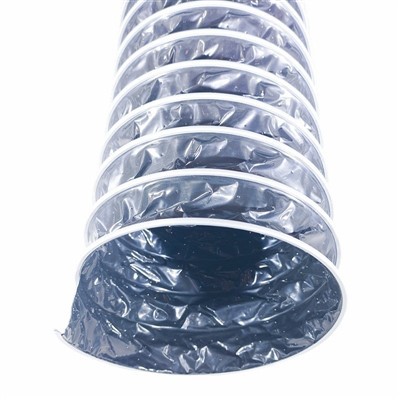
First, let’s start with the basics most suppliers skip: what a coupling actually does for a PVC steel wire hose. These hoses aren’t just plain PVC—they have a steel wire helix inside that gives them rigidity, keeps them from collapsing under vacuum pressure, and lets them hold up under higher working pressures than plain PVC hoses. The coupling has to grip that steel wire, not just the outer PVC, because if it only grips the plastic, it’s going to tear away the second you turn on full pressure. That’s why generic couplings meant for plain hoses almost never work right for our PVC steel wire lines. The best couplings don’t just fit the outside of the hose—they bite into that steel wire layer, creating a connection that’s as strong as the hose itself.
The first question I always ask a customer is what the hose is going to be used for. This isn’t just “it’s for water” or “it’s for air”—it’s the specifics that make all the difference. Let’s break down common applications I see, because each one demands a different coupling. If you’re using this hose for industrial vacuuming—like cleaning out factory debris, wood chips, or sawdust—you need a coupling that can handle constant negative pressure. Vacuum applications put way more stress on couplings than you’d think, because the hose is being pulled tight against the coupling, and any tiny gap means air leaks, which kills vacuum efficiency. For this, we almost always recommend galvanized steel or stainless steel cam and groove couplings. Cam and groove are quick to connect and disconnect, which is perfect for jobs where you’re switching hoses out frequently, and the metal material stands up to the abrasive dust that gets pulled through the hose. I had a customer last year who was using a cheap plastic coupling for his woodshop vacuum; it cracked after three weeks from the fine sawdust and constant tugging when he moved the hose. Swapping in galvanized cam and groove couplings fixed that issue immediately—he’s still using the same set a year later.
On the other end, if you’re using the hose for fluid transfer—like moving water, chemicals, or fuel—working pressure is the biggest factor. PVC steel wire hoses are rated for pressures from 10 PSI up to 150 PSI, depending on their size and wire gauge. A coupling rated for 100 PSI isn’t going to hold if your hose is rated for 150 PSI, no matter what the size says. Last month a customer came to me with a leaky hose for a pressure washing setup; he’d picked a coupling marked “for 2 inch hose” that worked for a week before blowing off. The issue? The coupling was only rated for 75 PSI, and his pressure washer runs at 120 PSI. We swapped him to a forged steel clamp-style coupling, rated for 200 PSI, and that fixed the problem. Clamp-style couplings are great for high-pressure fluid transfer because they crimp around the hose’s barbed end and have a metal clamp that tightens down, creating a tight, pressure-resistant seal. For food-grade applications—like pumping water for breweries or food processing plants—we have to go a step further. The coupling has to be made from FDA-approved materials, usually 304 stainless steel, so it doesn’t leach chemicals into the product. I always make sure to ask customers if their application is food-grade, because it’s not just a small detail—it’s a regulatory requirement for a lot of industries.
Next, we have to talk about the environment the coupling is going to live in. A coupling used outdoors in a construction yard is going to face way different conditions than one stored in a climate-controlled warehouse. If your hose is going to be used in cold temperatures—like freezing winter jobs outdoors—PVC gets brittle, and couplings made from regular steel can rust, which weakens them over time. A few years back, we had a customer in Minnesota who was using a regular black steel coupling for his snow removal hose. After one winter, the steel rusted so bad that the clamp broke when he went to connect the hose. We started recommending hot-dipped galvanized steel or 316 stainless steel for cold and outdoor applications, because both resist corrosion way better than plain steel. 316 stainless is even better for saltwater environments, like if you’re using the hose on a marina or coastal construction site—salt air eats through regular steel in months, but 316 holds up for years. For really hot environments, like asphalt paving where hoses might be run near hot equipment, we also avoid plastic couplings entirely—they warp at temperatures over 140°F, which ruins their fit. Metal couplings, especially forged steel, can handle temperatures up to 500°F, so they’re the only option for those jobs.
Size is another part that trips people up, and it’s not just nominal hose size. PVC steel wire hoses come in sizes from 1 inch up to 12 inches, but the inner and outer diameters can vary slightly between manufacturers. That’s why we always ask for the exact outer diameter of the hose, not just the size number, when matching couplings. A 2 inch hose from one supplier might have an outer diameter of 2.375 inches, while another might be 2.5 inches—if you pick a coupling marked “for 2 inch hose” without checking the OD, it’s either going to be too loose or too tight to fit. We keep a chart on hand that lists standard OD sizes for all the PVC steel wire hoses we sell, so we can match that to the coupling’s inner diameter perfectly, no guesswork. For larger hoses, 8 inches and up, we also recommend adding a stainless steel clamp or a locking pin to the coupling, because the bigger the hose, the more force the coupling has to hold. I’ve seen an 8 inch coupling blow off a hose when the steel wire inside pulled away, just because they skipped the extra locking feature for a big job—now we always mention that to customers working with hoses over 6 inches.
Material compatibility is the hidden factor most people overlook, and it can cause problems no matter what size or pressure rating you pick. If you’re transferring chemicals, even a small amount of acid or solvent can react with the coupling material, causing it to degrade, crack, or leak. For example, if you’re pumping weak acids like cleaning solutions, regular galvanized steel might hold up, but strong acids require 316 stainless. For fuel or petroleum products, we always recommend couplings made from black steel or brass, because plastic couplings can soften or break down when exposed to gas. Last year a landscaping company came to me with a hose for pumping gasoline to their lawn equipment; they’d been using a plastic coupling that melted after two weeks, so switching to a brass coupling fixed that instantly. The key here is to know exactly what fluid or material is passing through the hose, and what that material’s chemical properties are—we keep a compatibility guide for all our common coupling materials, and we send it to every customer so they don’t have to guess.
Let’s also talk about connection type, because ease of use matters for a lot of jobs. Cam and groove couplings are fast—you just line them up and snap them together, no tools needed—so they’re perfect for applications where you’re connecting and disconnecting hoses multiple times a day, like construction or landscaping. Clamp-style couplings need a wrench to tighten, which is slower, but they create a stronger, more permanent seal that’s better for high-pressure or heavy-vibration applications, like industrial manufacturing lines. Threaded couplings are good for permanent installations, like running hoses to a fixed pump, but they can loosen over time from vibration, so we always recommend adding a thread sealant or Teflon tape for threaded connections. I tell customers to pick the connection type that matches their workflow—if you’re switching hoses every hour, cam and groove is worth the extra cost for the time it saves. If you need a connection that won’t come loose even with heavy vibration, clamp-style is the better long-term choice.
One more thing we always cover is cost vs. durability. It’s tempting to go for the cheapest coupling you can find, but I’ve seen time and time again that it ends up costing more in the long run. A cheap plastic coupling might cost $5, but it breaks every month, and each replacement means downtime on your job. A quality galvanized steel coupling costs $15, it lasts for years, and you don’t have to worry about stopping work to fix a leak. I had a construction customer who was buying $3 plastic couplings for his concrete washing hose; he went through 10 a month, costing him $30 in replacements, plus an hour of downtime each time. Swapping to galvanized steel couplings cost him $15 each, and now he buys 2 a year, saving him thousands of dollars and hours of lost work. It’s not about spending the most—it’s about spending on a coupling that matches your needs, so you don’t have to replace it every few weeks.
At the end of the day, selecting the right coupling for a PVC steel wire hose is about matching three things: your application’s demands (pressure, vacuum, fluid type), the environmental conditions (temperature, corrosion, outdoor use), and the way you work (how often you connect/disconnect, downtime tolerance). There’s no one-size-fits-all coupling, but taking the time to work through these questions will save you from leaks, broken parts, and lost work.
If you’re not sure what coupling is right for your specific job, don’t guess—reach out. Our team works with customers every day to match hoses and couplings to their exact needs, and we’ll walk through every detail with you so you don’t have to worry about making a mistake. We can send sample couplings for you to test, answer any questions you have about materials or ratings, and make sure you get a connection that works as hard as you do.
Clip Industrial Fabric Air Duct Reference:
- Rubber and Plastics Hose Couplings: Selection, Installation, and Maintenance. Hose Manufacturers Association, 2021.
- ASTM F1819-17: Standard Specification for Flexible Hose Couplings for Industrial Service. American Society for Testing and Materials, 2017.
- Corrosion Resistance of Coupling Materials for PVC Hose Applications. Journal of Industrial Hose Technology, vol. 12, no. 3, 2020, pp. 45-52.
Dongyang Hstube Co., Ltd.
As one of the leading PVC steel wire hose manufacturers and suppliers in China, we warmly welcome you to wholesale cheap PVC steel wire hose for sale here from our factory. If you have any enquiry about free sample, please feel free to email us. Quality products and reasonable price are available.
Address: NO.5 CHENGDONG ECOLOGICAL INDUSTRIAL ZONE, DONGYANG, ZHEJIANG, CHINA.
E-mail: sales@hstube.com
WebSite: https://www.ductword.com/
