As a provider of 3D glasses, I’ve often been asked how these seemingly ordinary eyewear can create the amazing 3D effect that has captivated audiences in theaters, at home, and in various immersive experiences. In this blog post, I’ll delve into the science behind 3D glasses and explain how they transport viewers into a world where images seemingly leap off the screen. 3D Glasses

The Science of Depth Perception
To understand how 3D glasses work, we first need to grasp the concept of depth perception. Our eyes are positioned slightly apart, which means they view the world from slightly different angles. This disparity in the images received by each eye is known as binocular disparity. The brain processes these two slightly different images and combines them to create a single, three – dimensional perception of the world around us. This is what allows us to judge distances, sizes, and the relative positions of objects in space.
In a traditional 2D display, such as a regular TV or computer monitor, a single flat image is presented to both eyes. Since there is no binocular disparity, our brains perceive the image as flat. 3D technology aims to replicate the natural binocular disparity by presenting different images to each eye, tricking the brain into perceiving depth.
Types of 3D Glasses and How They Work
Anaglyph 3D Glasses
One of the oldest and simplest forms of 3D glasses is the anaglyph type. These glasses feature lenses of two different colors, typically red and cyan. Anaglyph 3D works by presenting two offset images of the same scene, each filtered through a different color. The red – filtered image is meant for the left eye, and the cyan – filtered image is for the right eye.
When you put on anaglyph 3D glasses, the red lens blocks the red – filtered parts of the cyan image and vice versa. Each eye only sees the image intended for it, creating the binocular disparity. The brain then combines these two images to perceive a 3D effect.
While anaglyph 3D is cost – effective and easy to implement, it has some limitations. The use of colored filters can distort the overall color of the image, and the quality of the 3D effect is not as high as with more advanced technologies.
Polarized 3D Glasses
Polarized 3D glasses are commonly used in theaters. They rely on the principle of polarization. Light waves oscillate in different directions, and polarization filters can be used to allow only light waves oscillating in a specific direction to pass through.
In a polarized 3D system, two projectors are used to display two slightly different images of the same scene on the screen. One projector emits light polarized horizontally, and the other emits light polarized vertically. The 3D glasses have lenses with corresponding polarization filters. The left – eye lens filters out the vertically polarized light and allows only the horizontally polarized light to pass through, while the right – eye lens does the opposite.
This way, each eye sees a different image, creating the binocular disparity needed for the 3D effect. Polarized 3D offers a high – quality, color – accurate 3D experience, and because it doesn’t use colored filters like anaglyph 3D, there is no color distortion.
Active Shutter 3D Glasses
Active shutter 3D glasses are a more technologically advanced option. These glasses work in conjunction with a compatible 3D display, such as a 3D TV or monitor. The display rapidly alternates between displaying the left – eye and right – eye images at a high frequency.
The active shutter glasses are wireless and synchronized with the display. They have electronically controlled shutters that open and close in sync with the display’s alternating images. When the left – eye image is displayed on the screen, the left – eye shutter on the glasses opens while the right – eye shutter closes, allowing only the left eye to see the left – eye image. The process is reversed when the right – eye image is displayed.
This continuous switching between the left – and right – eye images happens so quickly that the human eye doesn’t perceive the flickering, and the brain combines the two images to create a 3D effect. Active shutter 3D provides a very sharp and immersive 3D experience, but the glasses are more expensive than anaglyph or polarized 3D glasses, and they require a power source, usually batteries.
Circularly Polarized 3D Glasses
Circularly polarized 3D glasses are a variation of polarized 3D technology. Unlike linear polarization, which has horizontal and vertical orientations, circular polarization rotates the light waves either clockwise or counter – clockwise.
In a circularly polarized 3D system, the two images are projected with different circular polarizations. The left – eye lens of the glasses allows only the light with one circular polarization to pass through, and the right – eye lens allows the light with the opposite circular polarization.
Circularly polarized 3D has an advantage over linearly polarized 3D in that the 3D effect is maintained even if the viewer tilts their head. With linear polarization, tilting the head can cause the polarization to be misaligned, resulting in a loss of the 3D effect. Circularly polarized 3D provides a more forgiving viewing experience in this regard.
Applications of 3D Glasses
The use of 3D glasses extends beyond just movie theaters. Here are some other areas where 3D technology and glasses are widely used:
- Home Entertainment: With the increasing availability of 3D – capable TVs and Blu – ray players, many consumers are now enjoying 3D movies and games in the comfort of their own homes. Active shutter and polarized 3D glasses are commonly used for home 3D setups.
- Gaming: Many video games, especially those on consoles and high – end PCs, support 3D technology. 3D glasses can enhance the gaming experience by adding a sense of depth and immersion, making the virtual worlds feel more real.
- Virtual Reality (VR) and Augmented Reality (AR): While VR headsets are a more immersive form of 3D experience, some AR applications also use 3D glasses. For example, in some industrial or educational AR scenarios, 3D glasses can be used to overlay virtual objects onto the real world, creating a mixed – reality experience.
- Medical and Scientific Visualization: 3D glasses are used in fields such as medicine and science to visualize complex 3D models. Doctors can use 3D glasses to view medical scans in 3D, which can help in diagnosis and surgical planning. Scientists can also use 3D visualization to better understand complex molecular structures and other scientific data.
Choosing the Right 3D Glasses for Your Needs
As a 3D glasses provider, I often help customers choose the right type of glasses for their specific needs. Here are some factors to consider:
- Display Compatibility: Make sure the 3D glasses you choose are compatible with your display device. For example, if you have a 3D TV that uses active shutter technology, you need to buy active shutter 3D glasses.
- Comfort: Since you’ll be wearing the glasses for an extended period, comfort is crucial. Look for glasses with adjustable straps, lightweight frames, and soft padding around the eyes.
- Image Quality: Different types of 3D glasses offer different levels of image quality. If you’re a serious 3D enthusiast, you may want to invest in high – quality glasses, such as active shutter or circularly polarized ones, to get the best 3D experience.
- Budget: 3D glasses come in a wide range of prices. Anaglyph glasses are the cheapest, while active shutter glasses are more expensive. Consider your budget when making a decision.
Contact Us for Your 3D Glasses Needs
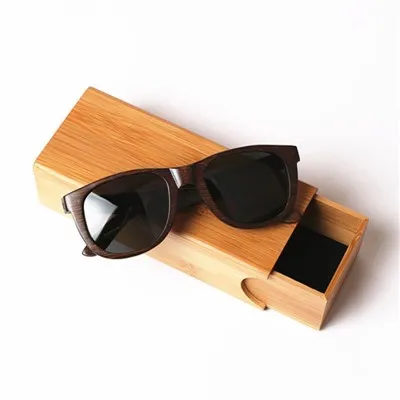
Whether you’re a theater owner looking to upgrade your 3D viewing experience, a gamer seeking to enhance your gaming setup, or a consumer interested in bringing 3D entertainment to your home, we have the right 3D glasses for you. Our extensive range of products includes anaglyph, polarized, active shutter, and circularly polarized 3D glasses, all of which are designed to provide high – quality 3D viewing.
Eco-friendly If you’re interested in learning more about our 3D glasses or are ready to place an order, please don’t hesitate to contact us. We’re here to help you find the perfect 3D glasses solution for your needs and to ensure that you have the most immersive and enjoyable 3D experience.
References
- Cutting, J. E., & Vishton, P. M. (1995). Perceiving layout and knowing distances: The integration, relative potency, and contextual use of different information about depth. In W. Epstein & S. Rogers (Eds.), Handbook of perception and cognition: Vol. 5. Perception of space and motion (pp. 69 – 117). Academic Press.
- Howard, I. P., & Rogers, B. J. (2002). Binocular vision and stereopsis. Oxford University Press.
- Ware, C. (2012). Information visualization: Perception for design. Morgan Kaufmann.
Yiwu Suki Glasses Co., Ltd.
As one of the most experienced 3d glasses manufacturers and suppliers in China, we also support customized service. We warmly welcome you to wholesale high quality 3d glasses at competitive price from our factory. Contact us for more details.
Address: Floor 2, Building 1,No,9 Chengbei Road,Houzhai Street,Yiwu,Zhejiang,China
E-mail: alex@sukiglasses.com
WebSite: https://www.suki-glasses.com/
