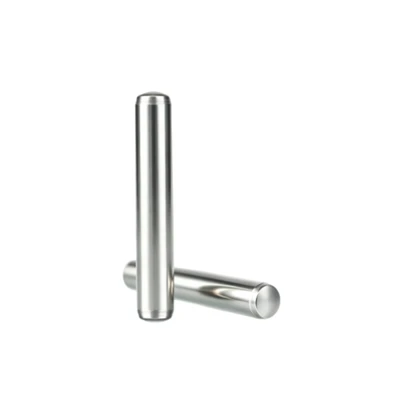
As a dedicated supplier of tooth spring pins, I often encounter inquiries about the assembly efficiency of these remarkable fasteners. Tooth spring pins, also known as slotted spring pins or coil pins, are cylindrical pins with a coiled design that features teeth along the circumference. These teeth provide a secure grip when inserted into a hole, making them an ideal choice for a wide range of applications, from automotive and aerospace to consumer electronics and industrial machinery. Tooth Spring Pins
Understanding the Basics of Tooth Spring Pins
Before delving into the assembly efficiency of tooth spring pins, it’s essential to understand their basic design and functionality. Tooth spring pins are typically made from high – quality spring steel, which allows them to have excellent flexibility and resilience. The slotted design enables the pin to compress slightly when inserted into a hole, creating a tight fit that resists vibration and shock.
The teeth on the pin play a crucial role in maintaining its position within the hole. They bite into the surrounding material, providing a mechanical lock that prevents the pin from backing out. This feature is particularly useful in applications where the pin may be subjected to dynamic loads or where a reliable connection is essential.
Factors Affecting Assembly Efficiency
Several factors can significantly impact the assembly efficiency of tooth spring pins. These factors range from the design of the pin itself to the assembly process and the material properties of the components being joined.
Pin Design
The design of the tooth spring pin can have a profound effect on assembly efficiency. Pins with a well – designed tooth profile are easier to insert and provide a more secure fit. For example, pins with sharp, evenly spaced teeth are more likely to penetrate the mating material smoothly, reducing the force required for insertion and minimizing the risk of damage to the pin or the component.
The diameter and length of the pin also play a role in assembly. If the pin is too large for the hole, it will require excessive force to insert, which can slow down the assembly process and potentially cause damage. Conversely, if the pin is too small, it may not provide a secure enough fit, leading to looseness and potential failure over time.
Material Compatibility
The material of the tooth spring pin and the components it is being assembled into must be compatible. Different materials have different hardness and ductility properties, which can affect the ease of insertion and the strength of the bond. For instance, if the pin is made of a harder material than the component, it may be more difficult to insert, while if the pin is too soft, it may deform or fail under load.
In addition, the surface finish of the pin and the hole can also impact assembly efficiency. A smooth surface finish on the pin reduces friction during insertion, making it easier to install. Similarly, a clean, well – finished hole provides a better seat for the pin, improving the overall fit and performance.
Assembly Process
The assembly process itself is a critical factor in determining the efficiency of tooth spring pin installation. There are several methods for inserting tooth spring pins, including manual insertion, semi – automated insertion, and fully automated insertion.
Manual insertion is the simplest and most cost – effective method, but it is also the slowest and most labor – intensive. It requires a skilled operator to carefully align the pin with the hole and apply the appropriate amount of force to insert it. This method is suitable for low – volume production or prototypes, where the cost of automation may not be justified.
Semi – automated insertion methods use tools such as pneumatic or hydraulic presses to assist with the insertion process. These tools can increase the speed and accuracy of pin insertion compared to manual methods, but they still require some operator intervention. Semi – automated systems are often used in medium – volume production environments.
Fully automated insertion systems are the most efficient option for high – volume production. These systems use robotics or other automated machinery to align, pick, and insert the pins with minimal human intervention. Automated systems can achieve high insertion speeds and consistent quality, reducing the overall assembly time and cost.
Measuring Assembly Efficiency
Assembly efficiency can be measured in several ways, including cycle time, insertion force, and defect rate.
Cycle Time
Cycle time is the total time required to complete one assembly operation. For tooth spring pin insertion, this includes the time to pick up the pin, align it with the hole, insert it, and verify the installation. A shorter cycle time indicates higher assembly efficiency.
Insertion Force
Insertion force is the amount of force required to insert the tooth spring pin into the hole. Excessive insertion force can slow down the assembly process, cause damage to the pin or the component, and increase the risk of operator fatigue. Measuring the insertion force can help identify issues with pin design, material compatibility, or the assembly process.
Defect Rate
The defect rate is the percentage of assemblies that do not meet the required quality standards. Defects can include pins that are not fully inserted, pins that have been damaged during insertion, or pins that do not provide a secure fit. A low defect rate indicates high assembly efficiency and reliable quality control.
Improving Assembly Efficiency
There are several strategies that can be employed to improve the assembly efficiency of tooth spring pins.
Optimize Pin Design
Working with an experienced manufacturer to optimize the design of the tooth spring pin can significantly improve assembly efficiency. This may involve adjusting the tooth profile, diameter, and length of the pin to ensure a smooth insertion and a secure fit.
Select the Right Materials
Choosing the appropriate materials for the tooth spring pin and the components being joined is essential. Conducting material compatibility tests can help identify the best combination of materials to ensure ease of insertion and long – term performance.
Upgrade the Assembly Process
Investing in the right assembly equipment can have a significant impact on assembly efficiency. For high – volume production, consider upgrading to a fully automated insertion system. For lower – volume production, semi – automated tools can still provide a significant improvement over manual methods.
Training and Quality Control
Providing proper training to assembly operators is crucial for ensuring efficient and accurate installation of tooth spring pins. In addition, implementing a comprehensive quality control system can help identify and correct issues early in the assembly process, reducing the defect rate and improving overall efficiency.
Conclusion

The assembly efficiency of tooth spring pins is a complex but crucial aspect of the manufacturing process. By understanding the factors that affect assembly efficiency, measuring key performance indicators, and implementing strategies to improve efficiency, manufacturers can save time, reduce costs, and improve the quality of their products.
Coiled Spring Pins As a leading supplier of tooth spring pins, I am committed to providing high – quality products and technical support to help our customers optimize their assembly processes. If you are looking to improve the assembly efficiency of your products using tooth spring pins, I encourage you to reach out to us. We can work with you to select the right pin design, materials, and assembly methods to meet your specific requirements. Let’s start a conversation about how our tooth spring pins can enhance your manufacturing process.
References
- "Mechanical Fasteners Handbook"
- "Spring Design and Application"
- Industry research reports on fastener assembly technology
Anhui Pins Metal Products Co., Ltd.
With abundant experience, we are one of the most professional spring pins manufacturers and suppliers in China. Please rest assured to buy high quality spring pins made in China here from our factory. For custom service and OEM&ODM service, contact us now.
Address: No. 381 Yangqiao Road, Quanjiao County, Chuzhou City, Anhui Province. Postal Code:239500
E-mail: info@chn-pins.com
WebSite: https://www.chn-pins.com/
