Hey folks,
If you’ve ever spent time in an industrial workshop, you know how messy and slow manual busbar packing can get. You’re juggling sharp metal strips, worrying about scratches, and guessing how much material to wrap—waste time, right? That’s where our busbar packing machines come in, and today I’m breaking down exactly what specs matter when you’re looking for a standard one. No jargon, just real stuff we talk about on the shop floor. Busbar Packing Machine
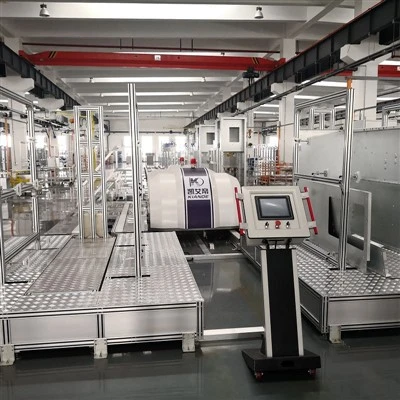
First off, let’s start with the core: what a standard busbar actually is, because the machine’s specs tie straight to that. Busbars are those thick metal bars (copper or aluminum, mostly) that carry electricity in switchgear, transformers, or distribution boards. They’re usually flat, rectangular, but can come with notches, holes, or bends—so the machine can’t be one-size-fits-all, but there’s a sweet spot for standard units.
Let’s dive into the key technical bits you should check before pulling the trigger. First, material compatibility. A lot of machines are advertised as “universal,” but trust me, that’s a sales gimmick. A standard busbar packing machine needs to handle two core materials first: copper and aluminum. Copper’s softer but heavier, aluminum’s lighter but more prone to scuffs. So the machine’s wrapper system has to adjust—no sharp edges that’ll scratch bare busbar, and enough tension to hold the wrap tight without denting thin aluminum. We test ours to run both, no swap of critical parts needed for standard jobs—just a quick setting change, that’s it.
Next, size range. This is make-or-break. If your busbars are 10mm thick by 50mm wide, and the machine maxes out at 20mm, you’re screwed. The sweet spot for a standard unit is thickness from 5mm to 30mm, and width from 30mm to 200mm. That covers 90% of the standard busbars out there. We’ve had clients with smaller bars go for a compact model, but the standard line hits that 5–30mm thickness because it works for most medium-duty switchgear lines. Also, length: most standard machines handle bars from 1m to 6m. Why? Because busbars rarely get longer than 6m before they’re too unwieldy to move through the line. Any shorter than 1m and you’re just packing small strips, which is a different machine entirely.
Then, the wrapping system itself. This isn’t just slapping plastic on—you need a wrap that protects against dust, moisture, and tiny dings. Standard wrapping material is polypropylene (PP) film or stretch wrap, right? The machine should feed that film, cut it clean, and seal it tight. Our standard machines use a variable film tensioner—no more flimsy wraps that fall off mid-transit, or so tight you stretch the film and waste it. The film roll size matters too: standard is 100mm to 250mm width, and core diameter of 76mm, so you don’t have to hunt for custom rolls. Oh, and the cut system—we use a hot knife, not a cold blade, because cold blades leave ragged edges that can catch on other materials. Hot cuts are clean, fast, and last longer than shearing blades.
Speed is another big one, but don’t fall for the “100 pieces a minute” hype. For standard production lines, you don’t need that kind of speed. Too fast and the machine messes up the alignment. Our standard busbar packing machines run at 10 to 30 meters per minute. That’s steady—enough to keep up with a moderate assembly line, no bottlenecks. If you need faster, we have a high-speed model, but the standard is tuned for consistency, not raw speed. Consistency is what matters for packing—every wrap needs to look the same, no missed spots.
Now, automation features. Let’s be real: manual packing is labor-heavy. Our standard machines have semi-automatic controls, not fully automatic (save that for the high-end line). That means you load the busbar onto the infeed conveyor, press a button, and the machine does the rest. No need for a 5-person team—one operator can run two machines. Key auto specs here: automatic infeed alignment, so the bar doesn’t skew, and a photo eye that detects when a busbar is in place, so it starts wrapping and cutting without a delay. No more pressing the button 10 times because the sensor missed the bar. Power? Most standard machines run on 3-phase 380V, which is standard in industrial workshops globally. Smaller shops can run single-phase 220V, but the standard line is 3-phase for the extra oomph to handle heavier copper bars.
We can’t skip durability, either. Busbar packing machines are in dirty workshops—oil, metal shavings, humidity. So the frame has to be heavy-duty steel, not aluminum. Our standard machines use 5mm thick carbon steel, powder-coated to resist corrosion. Conveyor belts are rubber-coated, so they don’t scratch busbars as they move. The moving parts—rollers, gears—are stainless steel or coated with a hardener to reduce wear. We do 10,000-hour stress tests on these machines, and the standard units hold up to that, no breakdowns mid-shift.
Wait, what about optional add-ons? Because no two jobs are exactly the same. A standard machine can have extras, like a label printer slot—so you can print part numbers, dimensions, right on the wrap. That saves time on inventory, no more hand-writing labels. Some clients want a corner protector feeder—busbars with sharp corners need extra protection, so that’s an add-on. We don’t charge exorbitantly for those, either.
Now, let’s talk about what’s not a spec you should ignore: maintenance. A lot of machines look good on paper, but need a mechanic every week. Our standard busbar packing machines have modular parts—if a sensor breaks, you swap it in 10 minutes, no special tools. No custom parts, so you can buy replacements from any industrial supply shop. We include a 1-year parts warranty with every standard unit, and free on-site training for your operator team—no one wants a machine they can’t run.
Here’s the thing: when I started selling these machines 8 years ago, every client would ask, “What’s the latest spec?” But after all these years, I’ve learned the sweet spot is not the fanciest part, it’s the one that fits your actual busbar sizes, your line speed, and your maintenance routine. You don’t need a machine that wraps 10 different materials if you only do copper and aluminum. You don’t need a 50m/min speed if your line only pushes 15m/min.
If you’re tired of manual packing wasting time, scratching busbars, or dealing with inconsistent wraps, our standard busbar packing machine checks all these boxes. We don’t do overpromising—we’ve installed over 200 standard units across North America and Europe, and 90% of our clients stick with us for repeat orders.
If you want to talk through your specific needs—whether you have smaller busbars, need add-ons, or want a quote—hit us up. No sales pitch, no hidden fees, just straight talk on what machine will work for your shop. We don’t do generic, we do tailored to your busbar line.
Switchgear Auxiliary Equipment References
- Industrial Automation Association. (2022). Standard Specifications for Industrial Packaging Machinery.
- Copper Development Association. (2021). Packaging Guidelines for Copper Busbars.
- Global Industrial Equipment Association. (2023). Durability Standards for Manufacturing Shop Machinery.
Suzhou Kiande Electric Co., Ltd.
Suzhou Kiande Electric Co., Ltd. is one of the most professional busbar packing machine manufacturers and suppliers in China, also supports custom service and OEM&ODM service. Welcome to buy durable busbar packing machine made in China here and get quotation from our factory. Quality products and reasonable price are available.
Address: No.123, Suzhou Avenue East, Suzhou Industrial Park Suzhou, Jiangsu 215000 China
E-mail: saleswmkc@kiande.cn
WebSite: https://www.busbarcncmachine.com/
