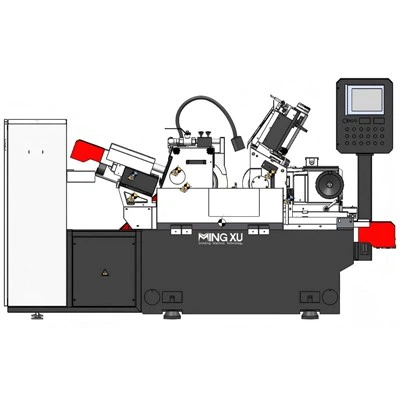
Precision surface grinding is a critical process in many manufacturing and metalworking industries. It is used to produce parts with extremely precise dimensions and smooth surface finishes. At our company, as a respected supplier of precision surface grinders, we understand that the selection of the appropriate grinding wheel is as crucial as the quality of the grinder itself. A well – chosen grinding wheel can significantly enhance the efficiency, accuracy, and overall quality of the grinding process. In this blog, I will share some key factors to consider when selecting a grinding wheel for a precision surface grinder. Precision Surface Grinder
Abrasive Material
The abrasive material is the foundation of a grinding wheel, and its properties determine the wheel’s cutting ability, wear resistance, and suitability for different workpiece materials.
Aluminum Oxide
Aluminum oxide is one of the most commonly used abrasive materials. It is relatively inexpensive and has good toughness. It can be used for grinding a wide range of materials, including carbon steel, alloy steel, and malleable cast iron. For precision surface grinding of these materials, aluminum oxide wheels are a popular choice because they can provide a consistent and smooth finish. The friability of aluminum oxide can be adjusted during manufacturing, allowing for different levels of self – sharpening. This is important in precision grinding, as a sharp abrasive grain is essential for achieving high – quality surface finishes and accurate dimensions.
Silicon Carbide
Silicon carbide is a harder and more brittle abrasive compared to aluminum oxide. It is particularly suitable for grinding non – ferrous metals such as aluminum, copper, and brass, as well as hard and brittle materials like ceramics and glass. In precision surface grinding of these materials, silicon carbide wheels can provide a faster material removal rate and a better surface finish. However, due to its brittleness, silicon carbide wheels may require more careful handling and dressing to maintain their shape and performance.
Cubic Boron Nitride (CBN)
CBN is an extremely hard abrasive material, second only to diamond in hardness. It is highly suitable for grinding hard ferrous materials, such as hardened steel and high – speed steel. CBN wheels offer excellent wear resistance, which means they can maintain their shape and cutting ability for a long time. This is crucial in precision surface grinding, where dimensional accuracy is of utmost importance. Although CBN wheels are more expensive than aluminum oxide or silicon carbide wheels, their long service life and high – performance capabilities often make them a cost – effective choice in high – volume production or applications requiring extremely tight tolerances.
Diamond
Diamond is the hardest known abrasive material. It is used primarily for grinding hard and non – ferrous materials such as carbides, ceramics, and glass. In precision surface grinding of these materials, diamond wheels can provide the highest material removal rates and the best surface finishes. However, diamond wheels are also the most expensive option. They require special handling and dressing procedures, as diamond is chemically reactive with iron at high temperatures. Therefore, diamond wheels are typically not used for grinding ferrous materials.
Grit Size
The grit size of a grinding wheel refers to the size of the individual abrasive grains. It is an important factor that affects the material removal rate and the surface finish of the workpiece.
Coarse Grits
Coarse grit wheels, typically with grit sizes between 16 and 36, are used for rough grinding operations. They can remove large amounts of material quickly but may leave a rough surface finish. In precision surface grinding, coarse grit wheels are usually used in the initial stages of the process to remove excess material and bring the workpiece close to the desired dimensions. For example, when grinding a large steel block to a specific thickness, a coarse grit aluminum oxide wheel can be used first to reduce the material volume rapidly.
Medium Grits
Medium grit wheels, with grit sizes ranging from 40 to 100, are a good compromise between material removal rate and surface finish. They can be used for intermediate grinding operations to refine the surface and improve dimensional accuracy. In precision surface grinding, medium grit wheels are often used after the rough grinding stage to prepare the workpiece for the final finishing operation. For instance, when grinding a precision – machined part made of alloy steel, a medium grit CBN wheel can be used to achieve a smoother surface and closer tolerances.
Fine Grits
Fine grit wheels, with grit sizes of 120 and above, are used for finishing operations to achieve a smooth surface finish and high – precision dimensions. They remove material at a slower rate but can produce a mirror – like surface. In precision surface grinding of optical components, fine grit diamond wheels are commonly used to obtain the required surface smoothness and optical quality.
Wheel Grade
The grade of a grinding wheel refers to the strength with which the bonding material holds the abrasive grains in place. It is an important factor that affects the wheel’s self – sharpening ability and its suitability for different grinding operations.
Soft Grade Wheels
Soft grade wheels are used when a high material removal rate is required or when grinding hard materials. In a soft grade wheel, the abrasive grains are held less tightly by the bonding material. As the grains become dull, they are more easily ejected from the wheel, exposing fresh, sharp grains. This self – sharpening feature allows the wheel to maintain its cutting ability. For example, when grinding a hardened steel workpiece with a CBN wheel, a soft grade wheel may be used to ensure efficient material removal and prevent wheel loading.
Hard Grade Wheels
Hard grade wheels are used when a fine surface finish and high dimensional accuracy are required or when grinding soft materials. In a hard grade wheel, the abrasive grains are held more firmly by the bonding material. This prevents the grains from being easily dislodged, allowing the wheel to maintain its shape and produce a consistent surface finish. For instance, when grinding a soft aluminum workpiece with a silicon carbide wheel, a hard grade wheel can be used to achieve a smooth and accurate surface.
Bond Type
The bond type is the material that holds the abrasive grains together in the grinding wheel. Different bond types have different properties, which affect the wheel’s performance, durability, and suitability for different applications.
Vitrified Bond
Vitrified bond is the most common bond type for grinding wheels. It is made by fusing a ceramic material with the abrasive grains at high temperatures. Vitrified bond wheels offer excellent dimensional stability, high heat resistance, and good self – sharpening ability. They are suitable for a wide range of grinding applications, including precision surface grinding. Vitrified bond wheels can be used with both aluminum oxide and silicon carbide abrasives and are often the preferred choice for general – purpose precision grinding operations.
Resinoid Bond
Resinoid bond is a synthetic organic bond made from phenolic resins. Resinoid bond wheels are more flexible than vitrified bond wheels and can provide a better surface finish. They are often used for grinding operations where a smooth surface is required, such as the grinding of tool steels and stainless steels. Resinoid bond wheels can also be used for high – speed grinding applications, as they can withstand the high centrifugal forces generated at high rotational speeds.
Metal Bond
Metal bond is typically used for diamond and CBN wheels. Metal bond wheels offer high strength and excellent wear resistance. They are suitable for grinding hard and brittle materials, such as carbides and ceramics. Metal bond wheels can hold the abrasive grains firmly in place, allowing for high – pressure grinding operations. However, metal bond wheels require more frequent dressing to maintain their cutting ability.
Rubber Bond
Rubber bond is a flexible bond that is used mainly for precision grinding operations where a soft touch is required, such as the grinding of delicate parts or the finishing of flat surfaces. Rubber bond wheels can provide a very smooth surface finish but have a relatively low material removal rate.
Workpiece Material and Shape
The material and shape of the workpiece are also important considerations when selecting a grinding wheel.
Workpiece Material
As mentioned earlier, different workpiece materials require different abrasive materials. For example, grinding steel requires a different wheel than grinding aluminum or ceramics. It is also important to consider the hardness and heat – treatment of the workpiece. Harder materials may require a harder abrasive or a softer wheel grade to ensure efficient material removal. Heat – treated materials may have different grinding requirements due to their changed microstructure.
Workpiece Shape
The shape of the workpiece can also affect the selection of the grinding wheel. For example, if the workpiece has complex shapes or internal surfaces, a wheel with a specific shape or a flexible bond may be required. In some cases, a special – purpose wheel may need to be designed to accommodate the unique shape of the workpiece.
In conclusion, selecting the appropriate grinding wheel for a precision surface grinder is a complex process that requires careful consideration of multiple factors, including abrasive material, grit size, wheel grade, bond type, and workpiece material and shape. At our company, we have a team of experienced professionals who can provide expert advice and guidance on grinding wheel selection. We are committed to helping our customers achieve the best possible results in their precision surface grinding operations.

If you are in the market for a precision surface grinder or need assistance with grinding wheel selection, we invite you to contact us for a procurement discussion. Our team will be happy to provide detailed information about our products and solutions and help you find the most suitable options for your specific needs.
CNC Centerless Grinder References
- "Grinding Technology: Theory and Applications of Machining with Abrasives" by Stephen Malkin
- "Manufacturing Engineering and Technology" by Serope Kalpakjian and Steven R. Schmid
- Various technical publications from leading grinding wheel manufacturers.
Wuxi Mingxu Machinery Equipment Co., Ltd.
As one of the most professional precision surface grinder manufacturers and suppliers in China, we’re featured by quality products and good price. Please rest assured to buy the best precision surface grinder for sale here from our factory. Also, custom service is available.
Address: No. 5-5 Jinke Wealth Plaza, Changjiang North Road, Xinwu District, Wuxi City, Jiangsu Province
E-mail: yingyingmxjd@163.com
WebSite: https://www.mingxu-china.com/
