When I walk through a customer’s warehouse, I don’t just see rows of forklifts, conveyor belts, and automated guided vehicles (AGVs) — I see a timeline of their operations, built over decades with every choice they made to keep goods moving. As a material handling equipment supplier who’s been in this game for 12 years, I’ve seen firsthand how the urge to modernize often hits a wall when teams try to integrate shiny new tech with aging, well-worn equipment. It’s not just about plugging a new AGV into an old control system; it’s about bridging gaps in infrastructure, teams, and even the way people make decisions. And those gaps rarely show up in spec sheets. Material Handling Equipment

Let’s start with the most underdiscussed challenge: compatibility of core systems. Last year, a mid-sized e-commerce fulfillment center came to me thrilled to have just dropped $200k on a fleet of new AGVs designed to cut pick times by 30%. But when their integrator tried to connect the AGVs to their 1995 warehouse management system (WMS), things fell apart. The old WMS spoke a proprietary language the new AGVs couldn’t parse — there was no standard protocol, no easy translation tool, because the original manufacturer of the WMS went out of business in 2002. We spent six weeks troubleshooting: patching custom code to sync order data, calibrating the AGVs’ navigation to avoid misalignments with the old conveyor’s safety sensors, and retraining their team to spot glitches the old system never had. The customer ended up missing their peak holiday window, and they told me later that a third of their initial budget went to workarounds no one had mentioned before they signed on. That’s the thing about legacy equipment: it’s not just old — it’s a custom, one-of-a-kind ecosystem that no modern tech was built to talk to.
Then there’s infrastructure wear and tear. I’ve seen warehouses with concrete floors cracked so badly that new AGV laser sensors can’t navigate without constant corrections, or electrical panels so outdated that adding a single new piece of equipment trips breakers daily. A food processing client of mine tried to add automated pallet wrappers to their line last year, only to find their 40-year-old overhead conveyor beams couldn’t support the weight of the new wrappers, which are 20 pounds heavier than the old manual ones they’d used for decades. They had to shut down the line for three weeks to reinforce the beams and upgrade their power supply — a cost they’d completely overlooked because the old equipment had never needed those modifications. It’s easy to assume “it worked for the old stuff, it’ll work for the new,” but material handling equipment’s physical demands change: new tech is often faster, more powerful, and more precise, and old facilities weren’t built to keep up. That’s not a flaw in the new equipment — it’s a gap in the planning that happens before integration even starts.
But here’s the challenge that keeps me up at night: people. Not just training, though that’s a big part of it, but the shift in team culture that comes with mixing old and new. A client in the automotive parts industry had a 25-year veteran lead their material handling team, who’d run forklifts and manage the warehouse’s manual inventory system his whole career. When we introduced new robotic pickers, he not only struggled to learn the new software — he resented it. He’d built his expertise around knowing every nook of the warehouse, every nuance of the old system, and the new tech made his skills feel obsolete. We tried bringing in cross-generational teams, pairing the veteran with a 22-year-old who’d grown up with automation, but even that didn’t fix the friction. It took three months of one-on-one mentorship where the veteran taught the team about the warehouse’s hidden workflow quirks, and the younger team member taught him the new system, before they stopped seeing the old and new as rivals and started working together. Too many companies treat integration as a tech problem, not a people problem, and that’s where half the delays come from.
Another often-overlooked hurdle is downtime. When you add new equipment to a facility that’s been running around the clock for years, you can’t just shut down operations to test. Most warehouses operate on razor-thin margins, especially during peak seasons, so any downtime is a hit to revenue. Last quarter, a retail distribution center tried to integrate 15 new conveyors with their existing line during a slow summer weekend. They didn’t schedule a full trial, just a quick test run — and on the first Monday of the back-to-school season, the old conveyor’s belt got caught on a new roller, shutting down 40% of their shipping capacity for 12 hours. The cost? An estimated $1.2 million in lost sales and late fees. That’s why we always push customers to do phased integration: test one new machine, tie it to a small section of the operation, work out the kinks, and only then scale. It’s slower upfront, but it avoids the kind of catastrophic downtime that can sink a quarter.
There’s also the issue of spare parts and maintenance. Old equipment has parts that are no longer manufactured, so when you mix old and new, you now have two separate inventories to track. A construction supply client of mine had both a 10-year-old fleet of reach trucks and a new fleet of electric forklifts. When a part broke on an old reach truck, it took three weeks to source from a specialty supplier overseas — during that time, they had to rent a temporary forklift at $150 a day, and missed two deliveries. Meanwhile, the new electric forklifts had parts that were generic, but their maintenance team didn’t know how to service them because they were trained only on the old equipment. The solution wasn’t just buying new parts bins — it was retraining the maintenance team to work on both, and setting up a cross-supplier agreement so old parts could be shipped faster. But that’s a cost that many companies don’t budget for when they first think about upgrading.
Now, I’m not here to say integrating new and old equipment is impossible. I’ve seen it work beautifully: a beverage distribution center that added AGVs to their manual pallet jack operations, cutting order fulfillment time by 25% while keeping their 50-year-old delivery docks fully functional. But it takes planning, not just a big check for new tech.
As someone who’s worked with hundreds of warehouses over the years, here’s what I tell customers before they even pick up a new piece of equipment: first, audit your existing system. Don’t just look at what you have — look at how it works together, what parts are obsolete, what infrastructure needs upgrades, and what your team actually knows how to operate. Then, start small. Pick a single section of the warehouse, test one new machine, sync it to your old system, and work out the kinks before scaling. Most importantly, involve your team from the start. The people who run the equipment every day know the quirks, the bottlenecks, and the hidden workarounds that no spec sheet will ever list. They’re the ones who will make the integration work — or break it.
At the end of the day, integrating new and old material handling equipment isn’t just about technology. It’s about balancing progress with the knowledge and infrastructure that’s already worked for you. It’s about not throwing out the baby with the bathwater — every old piece of equipment has a story, a role it’s played in your operations, and a way to fit alongside new tools.
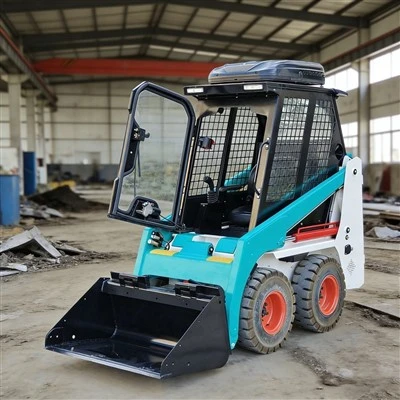
If you’re grappling with how to bridge the gap between your existing equipment and new solutions, I’m here to help. Let’s walk through your warehouse, talk through your bottlenecks, and figure out a plan that works for your operations, not just a one-size-fits-all spec sheet.
Aerial Work Platform References
- Material Handling Industry Association. (2022). Legacy Equipment Integration Challenges in Modern Warehousing. MHIA Annual Technical Report.
- Smith, J. (2021). Human Factors in Automation Integration: Bridging Generational Gaps in Material Handling. Journal of Supply Chain Operations.
- Lee, S. (2023). Infrastructure Compatibility for Mixed Material Handling Systems. International Journal of Industrial Engineering and Logistics.
Shandong Longqing Heavy Industry Co., Ltd.
Address: No.3 Shanbo Road, Hi-Tech Zone, Jining City, Shandong Province
E-mail: lqzg@lonqing.com
WebSite: https://www.longqinglift.com/
